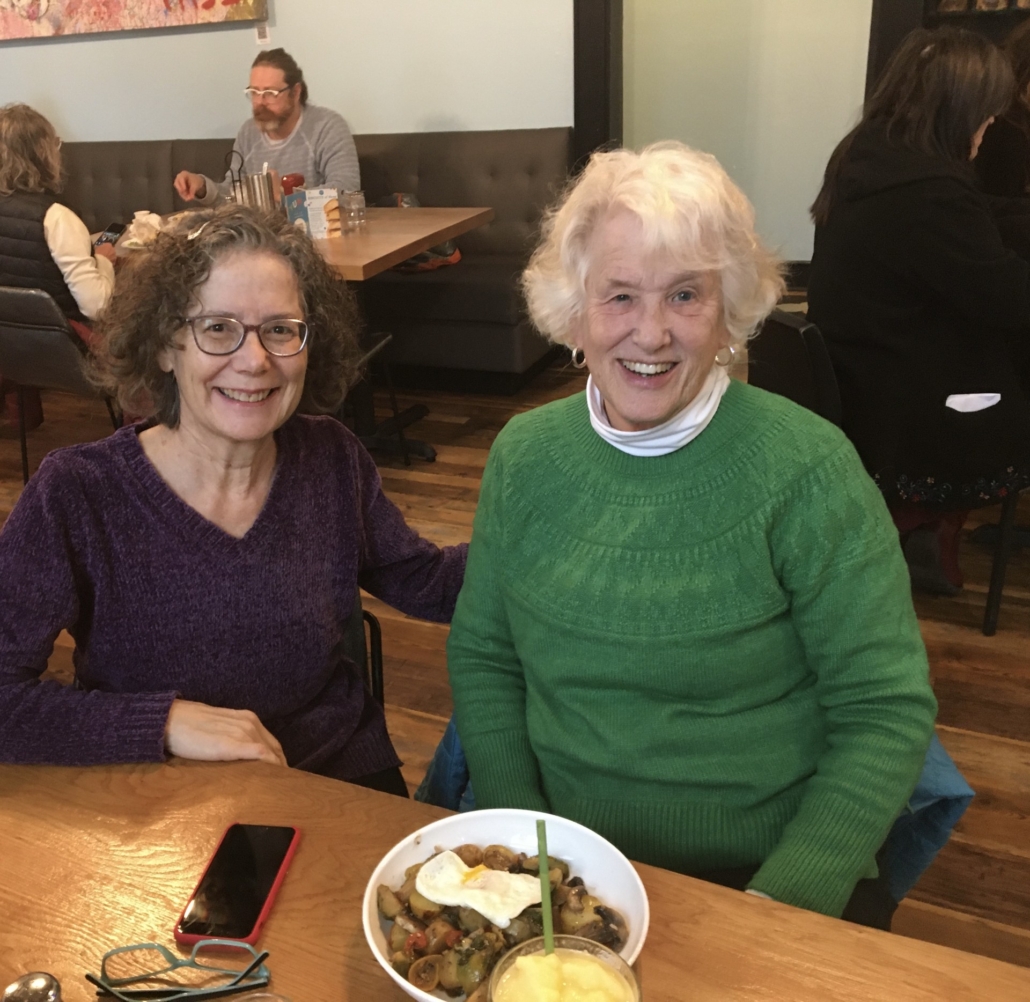
Thanksgiving weekend got me thinking about the balance of joys and sorrows that we experience. It is a great joy to take my sister-in-law annually to State College, PA for a Thanksgiving visit with her son (my nephew) and family. This year they decorated for Christmas early, and I was captivated by the dozens of holiday photos of their two children. It brought me such joy, I took photos of them hoping I’d be inspired to share in a newsletter blog. The theme of joy is also on my mind as I prepare a Unity Center church talk for this Sunday on joy in recognition of December 7 National Joy Day. Make it a point to treat yourself to joy and spread joy!

Yet life is full of contrasts, and sorrow is a reality. Another Thanksgiving tradition of mine is to acknowledge the realities of our complex history with the Indigenous people of this land. Usually I do so with a monetary contribution and lately also with a resolve to learn more about our shared history. 

This year, I watched the stunning 2024 National Geographic award-winning documentary, Sugarcane. It illuminates a community breaking cycles of generational trauma during an investigation into abuse and missing children at a nearby Indian Residential School run by the Catholic church. Although set in Canada, there have been 526 of these boarding schools identified in the United States established by the government and Christian churches in the 18th and 19th centuries. The history and purpose was to wipe out Indigenous culture and assimilate children into the dominate white culture, dramatically noted by Richard Henry Pratt founder of the Carlisle (PA) Indian Industrial School: “Kill the Indian in him and save the man.”

So you are not left in darkness, I offer some balance through one of my favorite poems by 14th century Persian poet Hafiz that encourages joy despite sorrow.

The Sacred Dance for Life by Hafiz

I sometimes forget that

I was created for joy

My mind is too busy

My heart is too heavy

Heavy for me to remember

that I have been

called to dance

the sacred dance for life

I was created to smile

to love

to be lifted up

and lift others up

O sacred one

Untangle my feet

from all that ensnares

Free my soul

That we might

Dance

and that our dancing

might be contagious.

Reflection: How might you lift others up in your career and in your life?

This autumn has caused me to reflect about the natural cycle of endings and beginnings. Around the time a close friend died, my neighbor had her baby and I attended my granddaughter‘s baby shower. What endings and beginnings are you experiencing? What are those that simply happened and those that you can or did create?

Perhaps you or someone you know are contemplating whether to end a job and look for a new one? Perhaps you’re contemplating retirement? Or thinking about what activities to bring into your life for more meaning? Decisions and new beginnings involve risk. It’s often easier to stay with what’s comfortable even if it’s not satisfying. Yet life is short. Time ticks away.

As we move into a season of gratitude and winter celebrations, appreciate what you have and look toward greater joy.

I’m happy to help as needed with career counseling. And no matter what your stage or age, poet Mary Oliver offers this reflective challenge:

“Tell me, what is it you plan to do with your one wild and precious life?” Mary Oliver, The Summer Day

As I am in the midst of a very long-overdue bathroom renovation with dozens of decisions, I have renewed empathy for my career counseling clients.  It doesn’t help that I’m a Libra; we are known for indecision. This has been an agonizing process for me.  After narrowing down paint choices and going in for three samples, I came back with a dozen more paint chips. How could this happen?  Whether you are weighing a job or career decision, or some other life decision, now or later, I thought you might enjoy a little insight into your own style. Of course, your style can vary and be a combination, but likely you lean toward one.

As an indecisive person, I thought it would be a win-win to research and present a program on the topic at my professional association.  (Note: I’m much better at helping others with their decisions than making my own, so please do keep those referrals coming!) I’m going to share a bit from the handout I had created for distribution, and happy to send you the whole resource sheet upon request which also includes the “Help” sections. Right, that’s an important part, but the article would have been just tooooo looong!

The following five decision-making styles were identified by Susanne G. Scott and Reginald A. Bruce. Their work is known as the General Decision-Making Style model (CDMS) which includes a related inventory. Although it may appear that some styles are more positive than others, individuals could have positive outcomes regardless of the style.  Typically career decisions are most grounded and less risky if they involve a balance of factual information and gut feelings.

Rational: Prefer to gather and analyze information systematically. Make logical and objective choices based on careful review of available information.

  • Potential Problem: Analysis Paralysis “I need more career information.”  “I’m overwhelmed by the information.”

Intuitive: Prefer to rely on gut feelings and instincts. Make choices based on a quick, less structured assessment of the situation.

  • Potential Problem: Not grounded in information. “I thought this was what I wanted, then I learned this.” “The career wasn’t what I expected.”

Dependent: Tend to seek input and guidance from others. They may feel more comfortable relying on external support and opinions.

  • Potential Problem: Pleasing others rather than self. “My professor/supervisor thought I’d be good at this.” “What do you think I should do?”

Avoidant: Tendency to procrastinate or avoid making decisions altogether. May feel overwhelmed by decision-making and prefer to delay it.

  • Potential Problem: Ending up rather than choosing. “I need to choose a major next week.” “It’s ok I was let go since I didn’t like the job anyhow.”

Spontaneous: Typically make quick decisions without thorough analysis. May rely on their immediate reactions, acting on the spur of the moment.

  • Potential Problem: Going from one job/career to another. “I had to get out of that job/major, though it looked ok initially.” “I feel like a jack of all trades and no career path.”

I’m figuring you have guessed my style by now. A dear friend who has been on this agonizing bathroom renovation journey with me, sweetly joked: “Maybe in your next life you won’t come back as a Libra.”

I had the joy this month of attending a concert by Herb Alpert and the Tijuana Brass.  It’s a national tour that celebrates his 90th birthday and the 60th anniversary of the 1965 #1 hit album Whipped Cream. What I thought I wanted to write about was his sharing that when his 98-year-old sister asked “why in the world are you doing this”, he answered “it gives me energy.”  Does YOUR work give you energy?  What can you do to give yourself energy in general?  For me, a big thing is dancing, so it’s been fun to enjoy dancing to A Taste of Honey again, like I did in my childhood game room.

Then I realized that so much about what Herb Alpert shared and what I additionally learned about him had the theme of SURPRISES. As a career counselor who helps people with career “planning,” it was a nice reminder that you just never really know.  We can try to plan for the future, but sometimes life just unfolds.

Here are a few surprises and reflective insights:

-Just before the concert, I read that he is Jewish! How interesting that he picked up the trumpet at 8, fell in love with the music at bullfights in Mexico, and then introduced Latin-inspired music to the American public. REFLECTION: Anything is possible!

-He helped launch grammy-winner Brazilian musician Sergio Mendez through his company A&M Records in 1966. REFLECTION: Support others and authenticity.

-As a record producer, he turned down the eventual number one hit Louie, Louie. REFLECTION: Sometimes we make mistakes.

-His big breakthrough was the song Whipped Cream that trumpeter and band leader Al Hirt turned down. By the end of 1965 it was the best-selling album in the US, surpassing the Beatles, Rolling Stones and Frank Sinatra. REFLECTION: What is a good (career) fit for one person may not be good for another. And sometimes we get lucky.

-A Taste of Honey which won four Grammys in 1965 was actually Side B of the original record. Herb Alpert convinced business partner Jerry Moss (who thought it was undanceable) to promote it based on audience reaction. REFLECTION: Listen to others, trust your instinct, and advocate for what you believe.

-I didn’t realize the beautiful abstract art slides during the concert were painted by him. He was a painter and sculptor since 1969, exhibiting in US, Europe and Asia. REFLECTION: We can move forward with talents in multiple directions. Honor where you are drawn to.

-Herb Alpert and his partner sold their A&M label to Polygram in 1990 for $500 million. He created the Herb Alpert Foundation that focuses on the Arts as well as Compassion and Well-being. REFLECTION: Main earnings may or may not come from core passion.

-While looking him up on-line, one of the suggested searches was inquiring about his “mental breakdown.” Indeed, it was the fall of 1969 when he had a dramatic moment of witnessing his unhappiness during a performance. It even affected his musicianship, and he entered many years of therapy.

In an interview with Los Angeles Magazine, Alpert said:

“Nothing was more important to me than finding my path, finding why I’m here: ‘What’s my mission in life?’ It was not just to be a celebrity or a guy who sold a lot of records. I did that, and it was nice, but it wasn’t going to be my salvation. I was looking for my reason for being. I was willing to throw my horn into the ocean if that’s what it took to find out. It was a long and winding road. It took years before I felt like I used to feel.”

REFLECTION: Nothing is more important than one’s mental health and self-awareness.

As a self-described introvert, he is frequently referred to as kind and prizing unfettered imagination and heartfelt sentiment.  I experienced him as unassuming and authentic. How would YOU like to be remembered?

Image through through Creative Commons through Expose

Sue seems ageless to me.  She’s been my administrative assistant two days a month for 15 years now. At first, I thought Sue mostly wanted my very part-time work as a retirement income supplement.  Then a couple years in, I learned that she found the work meaningful, helping me help people, a part of my two-person team. Wow, she was doing the work partly for the value of meaning, just like I encourage my clients. Does your contribution to the world bring you meaning, whether work, volunteering or family?

What can you do to keep you going? To keep things fresh? To keep you fresh?

Sue does just that and is an inspiration to me.  She might not think so.  She’s just been doing her thing. Church work, hosting weekly sing-a-longs, working out at the local community center. A long time effort has been her leadership in the Funeral Consumers Alliance of Western Pennsylvania, an affiliate of a national educational nonprofit offering funeral consumer support.  Sue was on the board for almost ten years, including as Secretary and Treasurer. A couple of years ago at the age of 76, she stepped up to be President of the group during a major transition period. About two months ago, I saw the fall newsletter she wrote announcing activities, including the annual meeting. It was so professionally done, and it struck me that she was in essence running a business, this meaningful organization.

How lucky I’ve been to have had Sue’s talents all these years. I wanted to recognize her today on Administrative Professionals Day.

Who might you want to recognize and thank for the support and inspiration they’ve given you?

What keeps YOU going? What might you do to help make your days on this earth even more meaningful?  If exploring a career change or retirement path, I’m happy to help.

Whether chaos of career or country, it can signify a state before creation where something entirely new and yet unknown has the potential to emerge. 

I’ve seen the chaos of COVID-19 cause people to re-examine values and make big time career changes. My hope is that the chaos of the country will cause kindness, compassion and deeper spiritual growth to emerge. Meantime, I take agency and action inspired from a place of love…in my family, community and country.

Taking action for career chaos or uncertainty may include self-reflection and career research; often working with a career counselor can bring some organization to randomly spinning thoughts.

As I have been contemplating the theme of chaos lately, I came across a blog post I made on January 12, 2021 following the January 6 attack on the US Capitol.  Below is a brief excerpt of the article I quoted that may be applicable during these times.

A Speed of Soul Encouragement – Acknowledging Grief, Claiming Love, Remembering Radiance – Excerpt

By Carrie Newcomer, Artist/Musician, originally posted in www.DailyGood.org, January 9, 2021

“My encouragement today is to claim agency and to claim love. Text, zoom, call or somehow connect with someone who you think of as a treasure in your life, someone that illuminates your life, who reminds you of the power of love and the remembrance of radiance. Reach out and affirm what keeps saving us – goodness, kindness, faithfulness, gratitude, generosity, hospitality, justice and love…always love. Lay your hand on your heart and know that you also illuminate the lives of others around you. You are also doing what you can each day, in your own way, to make the world around you a kinder place.

Today we acknowledge the shadows, but we lean into the light.”

In closing from Karen: May you find some calm and creation in any chaos of career and country.

CLICK HERE for complete blog post/article.

More about Carrie Newcomer HERE

Image: Chaos by Fenyou 2012, Creative Commons License

“Uncertainty is the only certainty there is, and knowing how to live with insecurity is the only security.”

John Allen Paulos

So many unknowns can create negative emotions during your job search, such as waiting to hear back on an email or after an interview. There will be unexpected questions during an interview for which you can’t prepare. When you do get an offer, you may wonder whether to accept it or whether you’ll hit a land mine once there.

The reality is that life is filled with uncertainty, even when you have a job. Managing uncertainty is important so you don’t get lost in feelings of fear and speculation.

Focus on what you can control, such as your schedule and job search efforts. Keeping busy, whether with a class or house project can divert your mind from worry. If your mind goes into a negative “what if” spin, remind yourself, “I can’t possibly predict the future.” Another strategy is defensive pessimism; this is increasing your confidence with coping by imaging a worst-case scenario and planning for it, such as making peace with an option to downsize your home. Mindfulness and stress reduction are additional strategies. You can choose to let uncertainty keep you up at night or see it as a challenge for practicing acceptance.

Affirmation: I accept uncertainty as part of life and find ways to cope.

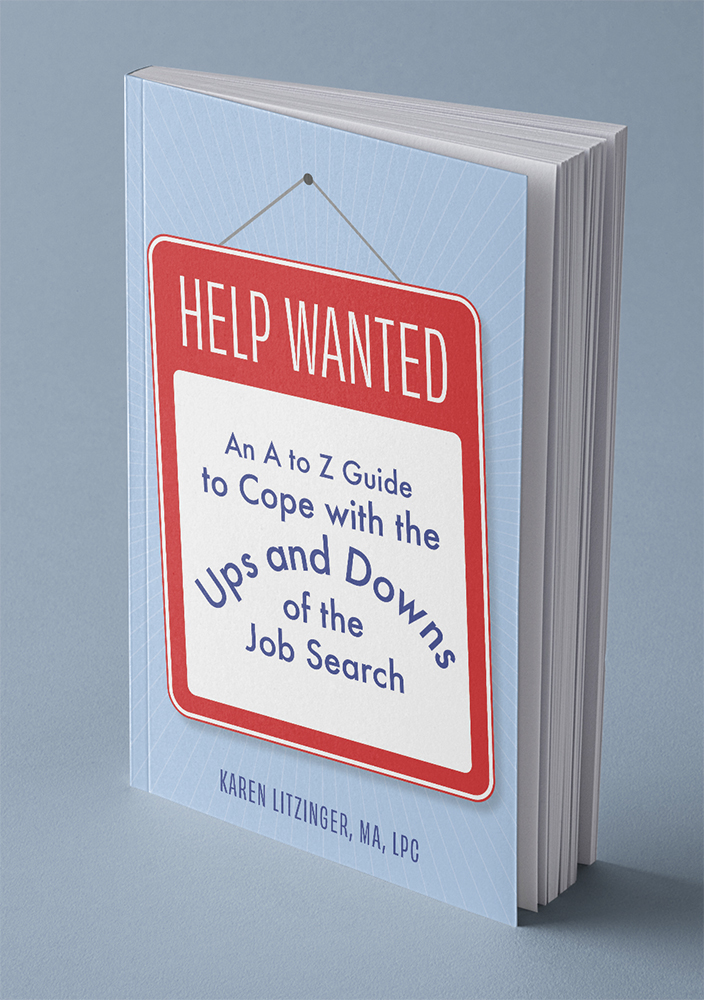
Copyright 2021, Karen Litzinger, Help Wanted: An A to Z Guide to Cope with the Ups and Downs of the Job Search. Permission is granted to share for non-commercial purposes with this entire notation, https://KarensCareerCoaching.com/help-wanted

For 10 complimentary excerpts of the book arriving daily: https://KarensCareerCoaching.com/help-wanted-free-excerpts

You can order the book through either link above.

My heart has been broken by the dismantling of the progress our country has made following our country’s second original sin of capturing and enslaving Africans (the first being genocide of the indigenous original inhabitants of this land).  President Trump “officially recognized” Black History Month just a couple weeks after signing executive orders in his first week ending federal programs related to diversity, equity and inclusion and reversing executive enforcement of civil rights laws. This came about the same time as the Department of Defense announced it would no longer recognize months related to cultural identities.

Such has been the fear of government employees about the DEI executive order, that employees at a national museum in DC rushed to cover up displays featuring women and people of color, later rectifying it and recognizing it as a mistake in an effort to comply.

So I am honoring Black History month by stating my concerns in this piece, by highlighting accomplishments of our African American/Black citizens, and by sharing lists of films, books and events to enlighten and educate (see immediate previous blog). My words and message may be imperfect, but comes from my heart.

Sample of Black History Career Accomplishments

As a career counselor, I love learning about and being inspired by people and their work. In honor of Black History month, I want to share an eclectic sampling.  Some individuals I highlight are a shout out and some are more obscure.  I wanted to go beyond contemporaries like President Obama, Michael Jordan, and Maya Angelou and famous names like Martin Luther King, Rosa Parks and Harriet Tubman. I’m not including the many artists, activists and athletes in this list, but they are in the exploration links at the end.

George Washington Carver (1860-1943)

Renowned for his innovative agricultural research and advocacy for sustainable farming.

Thurgood Marshall (1908-1993)

First Black appointee to the U.S. Supreme Court

Katherine Johnson (1918-2020)

Black mathematician whose NASA work was crucial in the success of the first American-manned spaceflight 

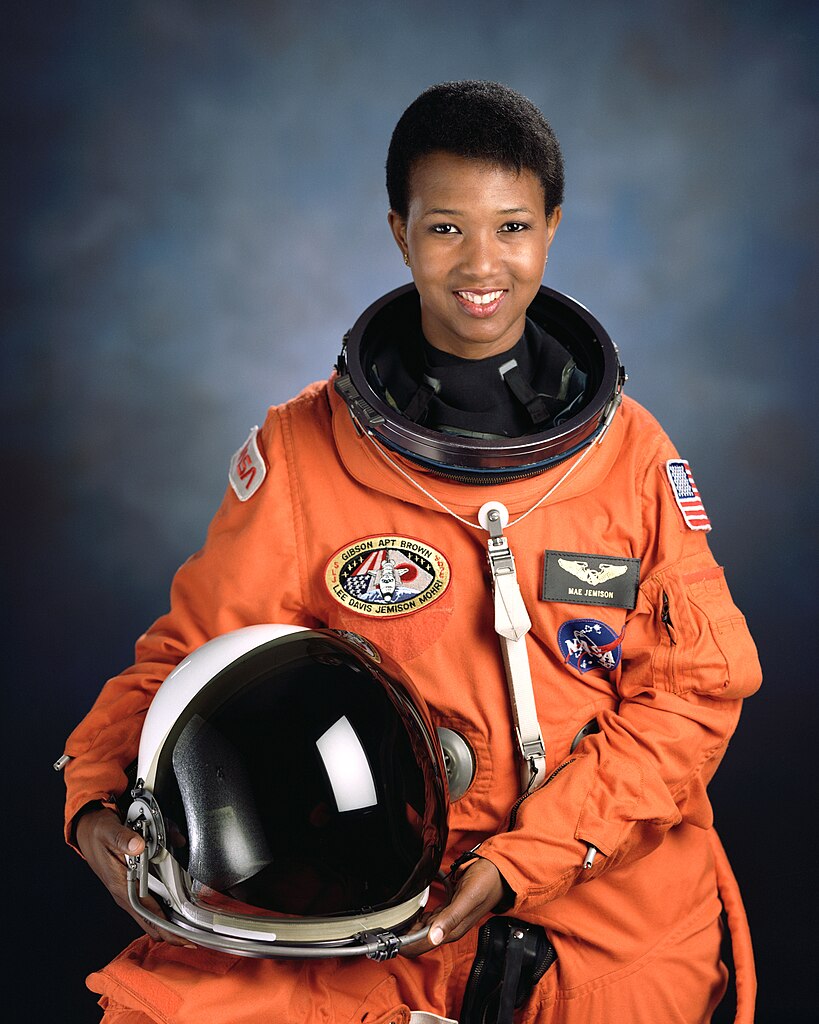
Mae Jemison (b. 1956)

First black woman to travel into space aboard the Space Shuttle Endeavour in 1992

Benjamin Banneker (1731–1806)

Almanac author, surveyor, and self-taught polymath who gained recognition for his work in astronomy and surveying the boundaries of the newly designed capital US Capitol.

Madam C.J. Walker (1867-1919)

First female self-made millionaire in America building her fortune on a line of beauty and hair products for Black women.

Thomas L. Jennings (1791–1859)

The first African American U.S. patent recipient in 1821, inventing a process for dry-cleaning delicate clothing known as “dry-scouring.”

Alice H. Parker (1895-death unknown)

1919 patent for central heating furnace design that made use of natural gas for the first time to keep homes warm

George Washington Carver (1860-1943)

Renowned for his innovative agricultural research and advocacy for sustainable farming.

Patricia Bath (1942-2019)

First black female doctor to receive a medical patent when she invented a laser cataract treatment device in 1986.

For more inspiration and awareness, see links below:

35 Famous Black Americans Everyone Should Know

101 African American Firsts

Famous Black Inventors

The last few years, I’ve started a tradition of watching a film during Black History month that educates, inspires and often challenges me about our country’s racial history.  I have been moved beyond words by the fabulous films, Eyes on the Prize (about Martin Luther King) and Good Trouble (about Congressman John Lewis).  Last weekend I watched Selma which was about the campaign to secure equal voting rights led by Martin Luther King. Each movie gave me an important shock.  In Selma, it was the vision of those four young black girls being killed by a bomb as they were walking down the stairs of their church; and also the sanctioned police brutality of attacking marchers on the Pettus bridge on horseback while white onlookers cheered on. In my head was: THIS HAPPENED DURING MY LIFETIME! We so are NOT past racism and racial reckoning.  And sadly, we are moving backwards.

I’m less of a reader, but will share that the book Waking Up White was a powerful, moving read. This may be small, but I was impacted by the story of how a black person felt like they couldn’t take the garbage out wearing a bathrobe to not create a negative impression, while we white people would think nothing of it. A small example of every day white privilege that I think of often.

Of course, there are many events each year to celebrate Black History Month. Since we are mid-month, the list in the links below will have some old ones. One more related to African roots is what I’ll be attending on March 23.  If you like singing, drumming and dancing, check this out: https://www.pittsburghyouthchorus.org/thula-sizwe

What might you put on your movie, reading and event list to add meaning to your life and to support understanding our shared history?  See some ideas in links below.

25 films with Oscar nominations and awards

Films with spiritual perspective

Books recommended by Black booksellers

Virtual Black History Month Events

Pittsburgh Black History Month Events

You’ve probably been asked the question at some point: What public figure do you most admire? Though there are so many admirable choices over centuries, I always came back to contemporaries, Fred Rogers and Jimmy Carter. On the one month marking of President Carter’s death, I want to share some tidbits that struck me as I listened to stories about this man of character, service and intellect.

But first, my connection to his warmth and authenticity began in 1976 when I heard him speak at my hometown Beaver Valley Mall the summer before my senior year in high school. I was so inspired that I did phone banking for his campaign that fall. Fast forward to 2018, I made a pilgrimage to Plains, Georgia to hear him give a Sunday School talk before church, which he’s done for decades and attracted people from many states and countries. At the end of the talk, he asked everyone to commit to reaching out to someone in need in the next month, even a small act of calling someone who is lonely. This experience is one I’ll always treasure.

My tribute in tidbits:

  • The first story I heard on the day of President Carter’s death was from a Fox News correspondent, David Spunt, who recalled from his 2009 interview how humble, informal and well-read President Carter was. Carter even researched the background of the 20-something reporter. They stayed in touch, and President Carter sent a signed book for him on upon the birth of his daughter.
  • In a 2002 rebroadcast from the PBS presidents’ biography series, I learned the tidbit that he said he didn’t want a presidential library as a monument to himself. He sat up in the middle of the night with the idea of using the center as a place for conflict resolution, saying yes to that.
  • During Vice President Kamala Harris’ eulogy at the Capitol, she recounted that “on their first trip for Habitat for Humanity, Jimmy and Rosalynn rode the bus with the other volunteers. And when the group stopped for the night to stay at a local church, Jimmy and Rosalynn gave their private room to a young couple who had put off their honeymoon to join the trip. And with the other volunteers, they then slept on the floor of the church basement.”
  • Phillip Kurland who had newly moved to Plains opening a souvenir shop wondered if the Carters really lived in Plains. Much to his surprise the Carters came in to his little shop to welcome him as it was being set up. As a good friend, he commented on Carter’s intellect and sharpness into his 90’s: The ABC10 local news story about this noted: My biggest dream is to come up with a topic that I could know more than him and I’ll bring something up and within two minutes my head is spinning, Kurland said. He makes me feel like… wow, I didn’t do my research.
  • A nod toward their basic living: He and Roslyn still washed and reused their plastic storage bags.
  • Someone recounted that they were aware from the Camp David talks, President Carter was so well researched that he knew the populations of villages in Israel and Egypt.
  • One story noted that a natural struggle for anyone in power (and think was said for him) was the balance of power and humility.  Likely his strong spiritual faith helped him with this.
  • His favorite bible verse was: “Be kind and compassionate to one another, forgiving each other, just as in Christ God forgave you.” Ephesians 4:32 (NIV)

Last week I stumbled on the magazine, a Life commemorative edition, Jimmy Carter: A Noble Life. Of course, I bought it. I’m sure there will be many more interesting tidbits to learn, but I want to share quite a synchronicity that at the end of the night on Monday, January 20, I decided to resume my reading.  The next article up? His inauguration speech.

Some of his speech was specific to the times, so I am choosing to share these two paragraphs that show insight to his spirit:

“You have given me a great responsibility – to stay close to you, to be worthy of you, and to exemplify what you are. Let us create together a new national spirit of unity and trust.  Your strength can compensate for my weakness, and your wisdom can help to minimize my mistakes.

Let us learn together and laugh together and work together and pray together, confident that in the end we will triumph together in the right.”

I’m well aware of President Carter’s flaws, described by himself and others.  He could be impatient, stubborn and micromanage details. And, of course, he was not good at dealing with the Washington DC politics, almost disdaining it….which didn’t help in navigating his presidency.  I think history will mark his presidency more favorably than now, and it is hard to imagine his post-presidency achievements ever surpassed.

——————————-

Post script For Myers-Briggs Type Indicator aficionados: I will share that after several books, CDs, and documentaries, I am going against already diverse public opinion and posit that his personality type is an INTJ: Introverted (the one I’m less sure of; going with this both because ENTJ’s are more forceful and this also is connected to his intense reading and science/submarine background); Intuitive (love of learning, ideas and reading, even though he also likes carpentry); Thinker (strong logic orientation; don’t let his service values trick you into the “Feeling” personality category); and Judgement (this doesn’t mean judgmental, but passion for having things decided, ordered and done).

More than anything, I think Jimmy Carter exemplifies a “renaissance man” which is why his personality is so hard to pin down.

INTJ descriptor: Have original minds and great drive for implementing their ideas and achieving their goals. Quickly see patterns in external events and develop long-range explanatory perspectives. When committed, organize a job and carry it through. Skeptical and independent, have high standards of competence and performance – for themselves and others.

Like in the movie, It’s a Wonderful Life,” we often don’t know the impact of our presence. This could be with work, family or friends. Sometimes it’s just small and special.

I missed seeing Christine’s smiling face at the Residence Inn this Thanksgiving morning.  She greeted us multiple times during our annual visit to State College relatives. The first year, she invited guests to write what they were grateful for on cut-outs of autumn leaves and vegetables and posted them in the eating area. I loved this! So much so that I took a photo.

Then she remembered us after that, bringing out the gratitude messages that she saved.

When I didn’t see Christine this Thanksgiving morning, I was going to dig out her photo and ask about her at the front desk. I was a bit worried. To my happy surprise, she was there on Friday morning and greeted me with a hug like family.  She had the holiday off. Good for her!

We reminisced a bit about the past gratitude project, then she disappeared into the kitchen for a bit while I talked to a longer-term resident she befriended.  Christine came back with a photo of the two of us on her phone and shared that the Thanksgiving gratitude messages were still hanging up back in the kitchen. How cool!

I asked how she was doing, and with a bright smile, she said “awesome.” I told her, of course, that is because her attitude is awesome.  Christine went on to say she loves her job, and meeting the people is what makes it special. That reminded me of why I love my work….as a career counselor I get to help others find something they might love…or at least like.

May this little holiday story remind us that we touch everyone we come into contact with. May we remember to share warmth and kindness with our presence and with our actions.  And may this positive energy help spread light during dark times.

“Each man’s life touches another.” It’s a Wonderful Life

I chose to celebrate my 65th birthday last month on a private retreat with my 23 year church group at the Benedictine Sisters of Erie Monastery. You may have heard of them in the news lately with the fraudulent claim that no one lives there. Besides such a meaningful retreat reflecting on my “next chapter,” I was heartened to learn of the beautiful leadership prayer by Sister Joan Chittister, which the sisters prayed together multiple times a day. Our country needs all the prayers and good wishes it can get. Among other things this week, I pray for peaceful and safe elections and more civility.

“Give us, O God, leaders whose hearts are large enough to match the breadth of our own souls and give us souls strong enough to follow leaders of vision and wisdom.”…

Sister Joan Chittister, Benedictine Sisters of Erie

CLICK HERE for the rest of the Prayer for Leadership

CLICK HERE for monastery response to voter fraud claim

CLICK HERE for video of conversation with Republican Liz Cheney and Sister Joan Chittister

(Click HERE for my post about World Gratitude Day.)

“Let us rise up and be thankful, for if we didn’t learn a lot today, at least learned a little, and if we didn’t learn a little, at least we didn’t get sick, and if we got sick, at least we didn’t die; so, let us all be thankful.” ~ Buddha

You may wonder, “How can I be thinking about gratitude when I’m in a cloud of career confusion or buried in rejections?” Gratitude is a coping tool during dark times, helping shift perspective. When we focus on lack, it creates negative energy that can paralyze our actions and repel people who may be able to help us.

Each day look for positive things: a beautiful sunset, a favorite food, an email from a friend, or a special moment with your child or pet. Maybe there are elements about your search process you can be grateful for, such as an email reply, a job prospect, or a networking meeting, even if only five minutes of it was helpful. Perhaps there is even something to be grateful for in the midst of the search itself, whether getting to spend more time with family due to a job loss or recognizing your courage to explore a new direction.

Consider starting a gratitude journal and writing down five short bullets about what you are grateful for each night before you go to bed. If you’re stuck, then write down that you have a bed to sleep in or a roof over your head. Think of one thing you are grateful for before getting out of bed, and that can change the course of your day.

Each day I notice things and people for whom I am grateful.

Copyright 2021, Karen Litzinger, Help Wanted: An A to Z Guide to Cope with the Ups and Downs of the Job Search. Permission is granted to share for non-commercial purposes with this entire notation, https://KarensCareerCoaching.com/help-wanted

For 10 complimentary excerpts of the book arriving daily: https://KarensCareerCoaching.com/help-wanted-free-excerpts

You can order the book through either link above.

Who might you want to thank in your life? On the 10th Anniversary of my business in 2012 I hosted a Pittsburgh World Gratitude Day event.  I found out about the September 21 world holiday when looking up the term “Thank-You-Note-a-thon” which was my original idea for the celebration. As a career counselor and business etiquette trainer, I’ve been all about thank you notes!  My anniversary event and the next five yearly events were fundraisers for Literacy Pittsburgh, a natural tie to writing notes.

I enjoyed reliving this meaningful period this past Sunday as the featured speaker at Unity Center of Pittsburgh.  I invite you to take a moment right now to write a note (ok, or email or text) to someone you appreciate to celebrate this Saturday’s World Gratitude Day.  I also invite you to view my inspirational message of gratitude that begins at minute mark 34 on THIS LINK. You may also want to check out the beautiful rendition of the song Count Your Blessings by Irving Berlin from the movie White Christmas at minute mark 30.

If you would like more information about gratitude practices, the history of World Gratitude Day, and my story of the impact of writing a thank you note to my 9th grade teacher, CLICK HERE for my website about this. I still keep it kind of alive thinking maybe someday I’ll do another event….

I also invite you to consider a contribution to Literacy Pittsburgh in honor of World Gratitude Day and in appreciation of their important service.

Do check out my other gratitude blog article which is an excerpt from my book, Help Wanted: An A to Z Guide to Cope with the Ups and Downs of the Job Search.  Yes, one can find reasons to be grateful even during trying times!

I leave you with a favorite quote on gratitude:

I was honored to be invited to write the Focus article on emotional intelligence for the National Career Development Association Quarterly, Summer 2024 issue. Although the audience is career professionals, the material and exercises are relevant to anyone. With addressing career-decision-making, job search, and career management, the information is applicable for a lifetime. The article is four pages, so I highly recommend clicking the PDF folder below, to make it an enjoyable read because of the amazing graphics. In case you can’t access it, the text version is below too.

The article, Three Career Lenses: Applying Emotional Intelligence Throughout Career Planning, by Karen Litzinger, originally appeared in NCDA’s magazine, Career Developments, at www.ncda.org. Copyright August 2024. Reprinted with permission.

Three Career Lenses: Applying Emotional Intelligence Throughout Career Planning

By Karen Litzinger

We all likely know someone intellectually bright who struggles with career success and satisfaction. Others may not have the same grades or credentials yet seem to flourish. The secret sauce in a happy recipe for life and work may be high emotional intelligence.

Daniel Goleman’s ground-breaking work in his book, Emotional Intelligence: Why It Can Matter More Than IQ remains a cornerstone in the field. Often referred to as EI or EQ, emotional intelligence is both understanding and managing one’s own emotions as well as recognizing and understanding others’ emotions. Goleman posits that EI may be even more important than cognitive intelligence (IQ) in predicting positive life outcomes.

The Five Key Components of Emotional Intelligence (Goleman, 1995):

  1. Self-Awareness – Recognizing and understanding one’s own emotions, including the impact on thoughts and behaviors.
  2. Self-Regulation – Managing and controlling one’s emotions, impulses, and behavior in different situations.
  3. Motivation – Focusing/directing emotions to achieve goals, persisting when encountering challenges, and maintaining a positive outlook.
  4. Empathy – Understanding the feelings and perspectives of others to enhance interpersonal relationships.
  5. Social Skills – Managing relationships effectively, including clear communication, effective teamwork, and conflict resolution.

We often think of EQ as related to dealing with “office politics” or career management. Yet EQ plays a role in how a student makes and pursues education and career choices. How a job seeker deals with the emotions of job loss or application rejection could determine self-sabotage or success.

This article looks at Goleman’s (1996) five components of emotional intelligence through three lenses: Career Decision-Making, Job Searching, and Career Management. Action strategies to enhance our efforts as counselors and coaches are offered for each of the five components. The framework can be used to identify possibilities for a holistic approach.

Career Decision-Making

  • Self-awareness: Help constituents explore interests, skills, values, and personality in career choice and understand decision-making styles. Explore the impact of career beliefs, family and societal pressures, and emotional and physical challenges. Ask about body sensations which can lead to identifying emotions and preferences.
  • Self-regulation: Encourage well-informed decisions rather than impulsive choices that might be rooted in the emotional urgency to decide or based on narrow perspectives, such as the latest “hot” careers. Engage in career conversations with loved ones that are calm and rooted in information rather than excessive emotion or argumentation.
  • Motivation: Listen to what is presented and offer tailored help to give hope. Present concepts and activities in manageable chunks so as not to overwhelm. Share that many career and educational paths are good choices, and there is no one “right” decision. Give positive feedback when career exercises are completed. Review progress and where the process is heading to show the big picture. 
  • Empathy: Guide constituents to see that their loved ones’ ideas or pressures may be rooted in concern about well-being or financial security.  Recognizing that we all have different values at different stages can help a person see things from others’ perspectives. When not hearing back from a contact for an informational interview, provide a reminder about how much email everyone receives.
  • Social Skills: Role-play how to communicate about career decision-making with loved ones in ways that enlist support rather than conflict. Educate about informational interviews, including introducing oneself, identifying questions to ask, and having a thank you protocol.  Encourage patience in hearing back from requests in this age of quick turnaround expectations.

Job Searching

  • Self-awareness: Normalize negative emotions regarding loss or rejection and help clients understand the importance of processing. Share that the emotional roller coaster of emotions, including shaken confidence, is common. Take time at the beginning of meetings to ask how the person is doing rather than rushing to job search advising, as unexpressed emotions may block progress.
  • Self-regulation: Discuss how frustration may come across in networking or job interviews in terms of words, tone, and nonverbal behavior. Coach and role play about how to avoid talking negatively about a past employer or situation or doing so in a brief, positive, and productive manner. Provide resources for stress management, counseling, or therapist referrals based on scope of practice.
  • Motivation: Provide stories of hope to counter pessimism and inaction.  Encourage looking at others’ success as potential for their own rather than through a lens of envy. Remind clients that it only takes one offer to reach success. Share stories of famous people who were rejected many times before success, such as Walt Disney, Stephen Spielberg, and J.K Rowling.
  • Empathy: When not hearing back from networking contacts or recruiters, remind your clients that it could be because they are busy or experiencing their own challenges. If a job seeker is envious of another’s success, ask if they really know what efforts or challenges that person went through in obtaining it.
  • Social skills: Teach and role-play interviewing and networking skills. Communicate that small talk is part of relationship building at the beginning of interviews and in networking settings. Review job search correspondence, including thank you messages. Frame negotiations as requests rather than demands. Remind clients that hiring decisions are about how a candidate fits into a team as much as about job-related skills.

Career Management

  • Self-awareness: Help clients direct their career path based on self-awareness and preferences rather than being pulled into roles by employer needs. This may include being aware of strengths that are not interests.  Explore assessments and 360 feedback to learn of strengths and areas for growth.
  • Self-regulation: Share tips like pausing before speaking, waiting 30 minutes before sending a sensitive email, and asking a trusted individual to review emails. Encourage finding a therapist or counselor, or trusted friend to discuss work issues with rather than colleagues.
  • Motivation: If disengaged, raise questions about whether the field, industry, or employer is a good fit and whether exploration of options may be helpful. If one’s career is not progressing, encourage trying new angles rather than focusing energy on what didn’t work in the past. Remind the person to do one’s best despite burnout or while job searching so as to leave on good terms with positive references.
  • Empathy: Help clients understand that colleagues may not be supporting their ideas or speaking up on bullying actions due to their own fears. Raise awareness that a supervisor may be experiencing conflicts between supporting staff and meeting the demands of superiors. Model fostering respect for others’ points of view and ideas.
  • Social skills: Educate about the importance of relationship building along with completing work tasks and demonstrating competence. Offer to review emails and role-play difficult conversations. Encourage participation in social events of the organization and profession.

Name, Tame, and Reframe

Understanding the relationship between thoughts, emotions, and behaviors can be a tool for emotional intelligence in career planning, especially related to the components of self-awareness, self-regulation, and motivation. Cognitive psychology is rooted in how distorted thoughts can lead to distressing emotions and maladaptive behavior (Beck, 1961) and was the precursor to Cognitive Behavior Therapy (CBT). The process of reframing negative thinking can be used by career practitioners at all levels.

Cognitive behavior model illustration – An activity to encourage client emotional intelligence:

Thoughts → Emotions → Behaviors

Name – Ask what barriers, concerns, or negative thoughts are at hand. Share any that have been observed or discussed. Encourage writing down the negative self-talk sentence. Inquire about what feelings result from saying that statement and what behavior might result from that feeling. If the individual is drawing a blank, share a few ideas and ask if these fit or if other ideas come to mind. Inviting the person to write down and/or sketch out the resulting feeling and behavior with connecting arrows further illustrates the concept.

Tame – The precursor to the Cognitive Behavior Therapy model, Rational Emotive Behavior Therapy, suggested disputing irrational beliefs to replace them with more adaptive beliefs (Ellis, 1962). This questioning and providing alternative evidence can diffuse or “tame” negative emotions that result from the original unhelpful belief.

Reframe – Ask what would be a more helpful sentence or belief to say to oneself rather than the original statement – not a Pollyanna affirmation like, “I trust the right path will come to me,” but something that is believable and makes them feel a bit better. Give examples if needed. Invite writing down the new reframed statement. Ask about resulting feelings and likely behaviors, inviting recording the new results.

Alternatively Lead with Emotions: Another angle for reframing could be first identifying the distressing feelings and then the possible unhelpful thoughts that preceded or followed the emotions. With that information, reframing thoughts can lead to more helpful emotions and behavior outcomes.  

Career Decision-Making Example

Name: My parents (or partner) will never let me do this career. → fear → not exploring it/arguing.

Tame: How will you know unless you ask? What if I helped you find a way to explain how thought out your choice is and how to remain calm?

Reframe: Maybe I could explain it with a new angle and your help. → hope, willingness → strategizing, asking.

Job Searching Example

Name: No one is going to hire me because of my age (or my degree or my lack of experience, etc.). → depressed, anxious → procrastinating, giving up.

Tame: How will you know unless you try? Remember, it only takes one offer.  Maybe someone will see your age as an asset because of wisdom or dependability. What if you take a course that shows your willingness and ability to learn new things?

Reframe: Even though there may be age discrimination, I can emphasize the positive aspects of my wisdom, reliability and recent learning, and then remind myself that I just need one offer. → more hopeful → willing to take action of applying or taking relevant workshops.

Career Management Example:

Name: I’m never going to get a promotion even though I’m such a hard worker. → frustration, anger → complaining, outbursts.

Tame: Hard work doesn’t automatically translate to a promotion. Have you asked for advice or feedback from others at your organization?  Are there courses for hard or soft skills that might be helpful?  A job change to another employer might be the necessary path.

Reframe: I’ll seek more advice and try one or two new angles and then probably look for a job at another company. → calmer, accepting → planning and productive action.

Stress Management: Coping, Band-aid, or More?

The EQ component of self-regulation naturally ties to techniques for stress management. It is better to punch a pillow than yell at an employer, right? These techniques may just be helpful coping band-aids to career challenges if not accompanied by self-awareness, empathy, and social skills. Beyond coping, these strategies may positively impact emotions and behavior. 

Certain behaviors are known to release endorphins, often referred to as a “feel good hormone” and can come from these activities (Harvard Health Publishing, 2021):

  • Exercise: Walking fast or other aerobic activities are most helpful for endorphin release, but any level of movement may help with stress management.
  • Meditation: This technique of deep breathing and focusing one’s mind is the most researched, yet other breathing or mindfulness techniques can help with stress management.
  • Music: All forms are helpful, including listening, singing, dancing, or playing an instrument.
  • Laughter: A good belly laugh can reduce stress and could come from watching a comedy movie or viewing humorous video clips.
  • Ultraviolet light: A walk on a sunny day releases endorphins and doing so in nature may increase the enjoyment.

Individuals in all stages of career development can benefit from stress management help for emotional regulation. A career professional can take an active role in helping clients by sharing a resource link, suggesting a technique, conducting a workshop, providing counseling, or referring to a therapist based on your scope of practice.

Moving Forward

Building emotional intelligence doesn’t have to feel like an extra task, rather it can be integrated into existing career planning activities. High EQ helps create success in both career and life. Many career practitioners likely already use EQ strategies and don’t realize it. Now appreciate the impact and importance!

Author:

Karen Litzinger (karen@karenscareercoaching.com) is the author of the award-winning book, Help Wanted: An A to Z Guide to Coping with the Ups and Downs of the Job Search. Karen spent over a decade in college career services and the last twenty years in private practice through Litzinger Career Consulting based in Pittsburgh, PA. She is a Licensed Professional Counselor, Board Certified Counselor, and Certified Career Counselor. Karen achieved professional-level status through the National Speakers Association and presents programs nationally and through video. For additional information about Karen and her book: KarensCareerCoaching.com.